
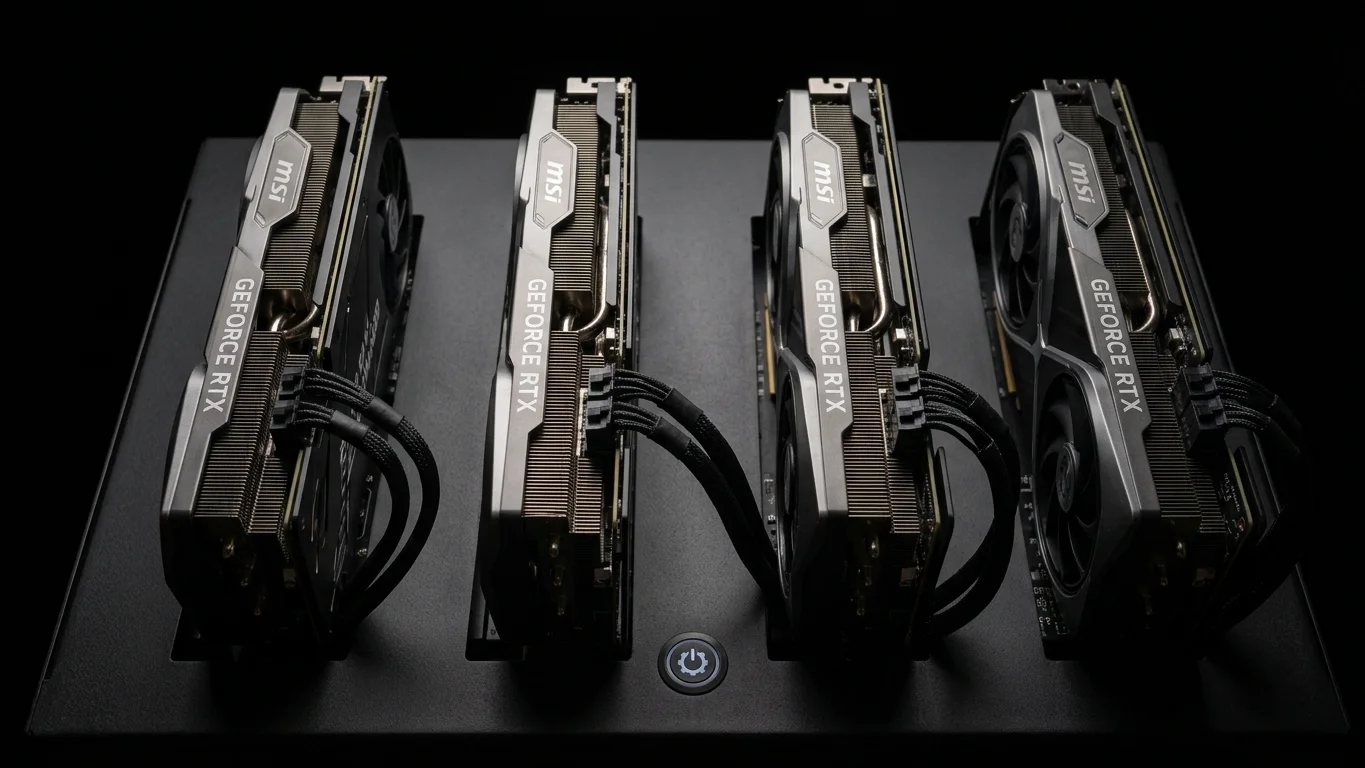
Bitcoin mining in 2026 is no longer about graphics cards in a garage. Over the past two years it has become part of the world’s energy and computing infrastructure: miners control hundreds of megawatts of grid connections, build data centres for artificial intelligence and help balance power systems. Here is what is happening in the industry in autumn 2026 and what it means for an ordinary user in Georgia.
What is happening on the Bitcoin network in autumn 2026
In October 2025 bitcoin set an all-time high of about $126,000, and the network’s total computing power (hashrate) peaked at roughly 1,160 EH/s. In spring 2026 the price fell to $68,000–70,000, below the average production cost of listed miners, which CoinShares put at about $75,000–80,000 per coin. Weaker players switched off old machines, and hashrate dropped to around 920 EH/s.
By autumn the market had recovered. In October the price is trading around $80,000–87,000, hashrate is once again close to the symbolic 1 ZH/s (1,000 EH/s), and on 16 October network difficulty rose by 5.92%, one of the largest increases of the year. Revenue per unit of computing power (hashprice) climbed from a record low of about $28 per PH/s per day in March to $36–40 in autumn.
The big shift: mining farms are becoming AI data centres
The most important story of the year is not the price but what miners themselves are doing. Training and running neural networks needs, above all, connected electrical capacity, cooling and ready-to-use sites, and mining companies already have all three. So they are leasing capacity to AI companies on a large scale:
- according to CoinShares, listed miners have announced AI and high-performance computing contracts worth more than $100 billion;
- a megawatt used for AI earns about $1.5 million a year, against roughly $0.5 million in mining;
- in Q2 2026 IREN’s AI cloud revenue ($70.5 million) exceeded its bitcoin mining revenue ($66.7 million) for the first time;
- major deals have been signed by Core Scientific (with CoreWeave), Hut 8 (a 15-year, $7 billion lease), TeraWulf and Cipher.
The paradox is that these contracts are exactly what put mining back in the spotlight: a mining farm turned out to be a flexible site that can switch between securing bitcoin and computing for AI.
New hardware: under 10 joules per terahash
Manufacturers have released a new generation of ASICs, the Antminer S23 and Sealminer A4, with efficiency of about 9–10 J/TH. Five years ago 30–40 J/TH was normal. The lower the figure, the less electricity is spent for the same result, so older machines become unprofitable faster and end up on the second-hand market. The next halving, which will again cut the block reward in half, is expected in April 2028, and the industry is already preparing for it.
Mining as a “battery” for the power grid
A mining farm can be switched off in seconds and back on without harming the equipment. That is why in the United States and other countries miners are increasingly used as a flexible load: they absorb surplus power at night or on windy days and shut down at peak hours, receiving compensation for it. For grids with a large share of solar and wind generation this is becoming a useful tool.
What is happening in Georgia
With its hydropower, Georgia has long attracted miners. According to the regulator GNERC, in 2025 large data centres, mostly mining ones, consumed about 752 million kWh, roughly 5% of the country’s electricity, and consumption in January–November grew by almost 80% year on year. In summer 2026 the topic became a public debate, with proposals to restrict mining in free industrial zones because of the load on the grid.
Is home mining worth it in 2026?
For most people, no. A single modern ASIC draws 3–5 kW, is as loud as a vacuum cleaner and heats a room like a space heater. Such a load needs a dedicated circuit with the right cable size and breaker: extension leads and old wiring are a common cause of fires. If you still decide to try, first ask an electrician to check the wiring.
Buying ex-mining hardware is a separate question. Graphics cards and power supplies from farms are often sold cheaply but may be worn out. Before you buy, get a computer diagnostics check, and our tech auction will help you see what a fair price looks like.
In short
- The Bitcoin network is back near 1 ZH/s and difficulty is rising.
- Miners are turning into suppliers of power and sites for AI.
- New ASICs are two to three times more efficient; old hardware moves to the second-hand market.
- In Georgia mining uses about 5% of electricity and is the subject of public debate.
Sources: CoinShares mining reports (Q1–Q2 2026), CoinDesk, Bitcoin network data for October 2026, GNERC. This article is for information only and is not investment advice.
Comments 0
No comments yet. Ask a question and a technician will reply.